Tres Cruces de Oro Cusco The Mystical 3 Suns Sunrise

Tres Cruces de Oro Cusco The Mystical 3 Suns Sunrise

Tres Cruces de Oro: The Awakening of the Inti and Cusco Astronomical Mirage

There is an exact point in the Andes where cosmic science and Inca spirituality merge into an unparalleled visual spectacle. This is Tres Cruces de Oro (Three Crosses of Gold), a natural viewpoint suspended at over 11,800 feet (3,600 meters) above sea level in Paucartambo, Cusco. Known as the "Balcony of the East", this mystical destination is the stage for one of the rarest and most beautiful optical and astronomical phenomena on Earth: the sunrise of the three suns.

A Unique Astronomical Phenomenon

Far from being just a myth, the sunrise at Tres Cruces de Oro is a wonder of atmospheric physics and astronomy. During the winter solstice (around June 21st), the Earth's alignment and the specific weather conditions at the border between the Andes mountain range and the Manu National Park rainforest align perfectly.

  • Light Refraction: As the first rays of dawn pierce through the dense layers of moisture and suspended ice crystals rising from the Amazon basin, the atmosphere acts as a giant prism.
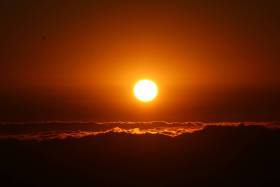
  • The Parhelion Effect: This optical phenomenon, similar to a parhelion or sun dog, distorts sunlight to create a cosmic mirage. The sun appears to multiply, displaying three symmetrical light sources or "three suns" floating over the horizon before merging into a single king star.

Did you know? This clean, humid light refraction event occurs with such pristine clarity in only two places in the world: Mount Fuji in Japan, and Tres Cruces de Oro in Paucartambo, Peru.

The Awakening of the Inti: Mystical Connection and Andean Spirituality

In the Inca worldview, this phenomenon was not a mere physical coincidence, but a sacred manifestation. The winter solstice marks the Inti Raymi (the Festival of the Sun), the exact moment when the sun god Inti is at his farthest point from Earth.

Witnessing the sunrise at this natural sanctuary is a profoundly mystical experience:

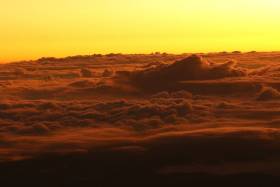
  • The Sea of Clouds: Before dawn, visitors float above an infinite ocean of white mist blanketing the Amazon, symbolically connecting the Uku Pacha (the underworld) with the Hanan Pacha (the celestial world).
  • Solstice Energy: The freezing highland air is pierced by the first golden flashes. Colors explode into vibrant shades of purple, orange, and fiery gold, restoring vital energy to the Earth in a breathtaking cosmic rebirth.

Today, travelers from around the globe and local shamans gather on this peak to perform gratitude rituals to Pachamama (Mother Earth) and greet the new solar cycle, charging themselves with the mystical energy that emanates from this Andean vortex.

Plan Your Travel for Astronomical Tourism in Cusco

If you are looking to experience astronomical tourism in Peru and seek a spiritual journey that challenges your senses, the ideal season to visit Tres Cruces runs from June to August, with the dawn of the June solstice being the ultimate peak moment.

Pack your mountain gear, open your mind to the mysticism of the Andes, and witness the most beautiful sunrise in the world.

  • Itinerary
  • Includes
  • Prices
  • Book

Duration: 2 Days / 1 Night

Focus: Astronomy, Culture, and Mysticism

Day 1: June 20th – Journey to the Balcony of the East

  • 13:00 - Departure from Cusco: Departure by private transport toward the province of Paucartambo, beginning our winding ascent into the Andes.
  • 15:00 - Archaeological Stop at Ninamarca: A short guided tour of the Chullpas de Ninamarca, mysterious pre-Inca funerary towers.
  • 16:00 - Colonial Paucartambo: A brief stop in this picturesque folklore-rich town to stretch your legs, enjoy a hot herbal tea, and purchase final supplies for the night.
  • 17:00 - Ascent to the Acjanaco Pass: The final driving stretch, climbing toward the high-altitude borders of the Manu National Park.
  • 18:30 - Arrival at Tres Cruces de Oro & Camp Setup: Arrive at the natural viewpoint, perched at 11,800 feet (3,600 meters) just as night falls. We will set up camp as the temperature rapidly drops below freezing (0°C / 32°F)—time to bundle up in your heavy winter layers.
  • 19:30 - Mountain Dinner: Enjoy a light, comforting dinner paired with hot drinks to combat the crisp highland cold.
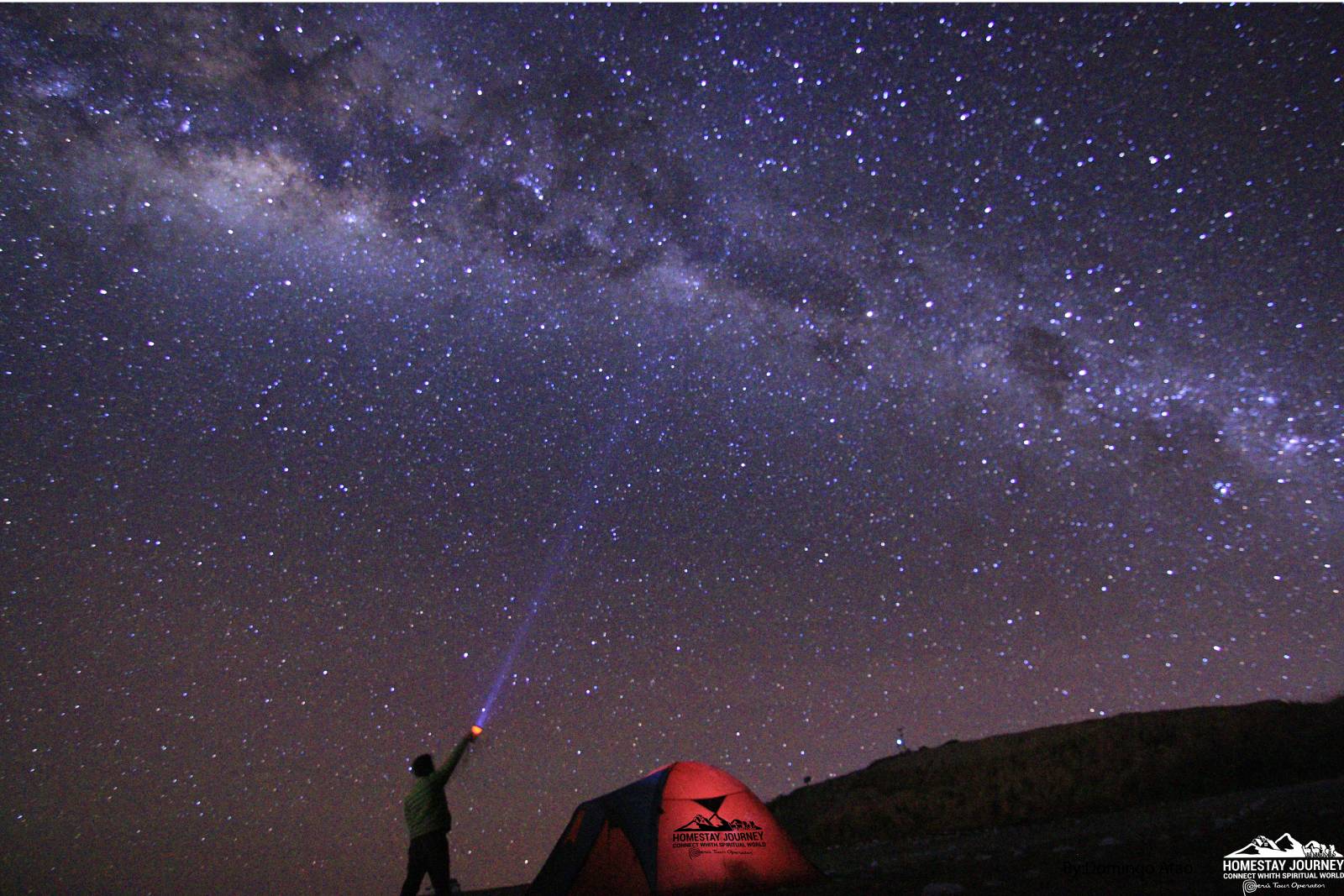
  • 20:15 to 21:15 - Evening Session: "The Night of Stars & Andean Worldview":

Taking advantage of being on the eve of the winter solstice under one of the purest skies on Earth, we will gather by lantern light. Our expert guide will lead a cultural interpretation of the firmament:

    • An explanation of the Dark Cloud Constellations (Yana Phuyu), such as the Celestial Llama and the Partridge, which were vital to the Inca agricultural calendar.
    • Insight into the deep spiritual meaning of Inti Raymi and how ancient Andean astronomers calculated the solstice from sacred peaks like this one.
    • Q&A session and a quiet moment to connect with the cosmos before heading to bed.

Day 2: June 21st – The Awakening of the Three Suns

  • 04:30 - Wake-up at the Summit: Sip on hot coca tea to warm the body and adjust to the altitude. The massive sea of clouds blanketed over the Amazon basin begins to unveil beneath the fading moonlight.
  • 05:15 to 06:15 - The Solstice Astronomical Phenomenon (The Ultimate Peak):

A guided observation of the breathtaking astronomical mirage of the "three suns." Your guide will explain in situ how light refraction interacting with pristine Amazonian moisture creates this world-famous optical illusion. Free time for photography, meditation, and ritual connection.

  • Followed by a spiritual meditation to connect us with the Spiritual World, to clean our soul of any negative energies, experience a moment of clarity to pursue the meaning of our life, confront our fears and insecurities, create peace, tranquility, harmony, happiness, give joy to our heart and meet our own Self.
  • 07:00 – Breakfast time: to enjoy a nice breakfast
  • 07:45 - Return Journey to Cusco: Drive back down, enjoying the sweeping Andean landscapes illuminated by the crisp, new winter sun.
  • 13:00 - Arrival in Cusco City: End of services and drop-off at your hotel.

Includes

  • Guide: Professional, bilingual guide
  • Transport: as mentioned in the programme
  • Lodging: Camping Tents
  • Meals: Dinner and Breakfast (vegetarian option)
  • Entrance fee: Tres Cruces

Not include

  • Flights from Lima to Cusco and Cusco to Lima
  • Hotel in Cusco
  • First day Lunch, and lunch, dinner in Cusco on the last day

Recommendations

To fully enjoy your trip, you may like to bring:

  • Your original Passport
  • Hiking shoes
  • Warm jacket
  • Sun glasses
  • Sun blocker
  • Professional Camera
  • passenger to have a high-quality sleeping bag rated for below-freezing temperatures (ideally a down or thermal bag with a comfort rating of (10°C/14 °F)

If you’re heading to the famous Tres Cruces de Oro Paucartambo? It’s important to go. June 20-21 solstice sunrise and July 15-16 Andean festivity are the best months to visit the Mirador de Tres Cruces in order to catch that amazing winter solstice sunrise. But the nights are extremely cold, frequently dropping below freezing!

Prices and discounts

A mínimum group size would be 2 persons. The bigger the group, the lower our cost per person: please, find our prices and discounts below!

  • Group of 2 USD 370 per person
  • Group of 3 USD 300 per person
  • Group of 4 USD 250 per person
  • Group of 5 USD 220per person
  • Group of 6 or more USD 200, - per person

Frequently Asked Questions: Tres Cruces de Oro Solstice Tour

1. What exactly is the "three suns" phenomenon?

It is a rare optical and astronomical phenomenon caused by light refraction. As the first rays of dawn pass through ice crystals and dense moisture rising from the Manu rainforest, the atmosphere acts as a giant prism. This creates a cosmic mirage where the sun appears to multiply into three symmetrical light sources before merging into a single star.

2. Can this phenomenon be seen at any time of the year?

Not with the same crisp clarity. While the sunrises over the sea of clouds are beautiful throughout the dry season (June to August), the optical illusion of the three suns occurs at its absolute best during the winter solstice (around June 21st) due to the exact astronomical alignment and specific atmospheric conditions of that date.

3. How cold does it get at Tres Cruces de Oro at night?

The weather is extremely cold. The viewpoint sits at over 11,800 feet (3,600 meters) above sea level and borders the cloud forest, which brings freezing winds and high humidity. During the night and early morning of the solstice, temperatures can drop below freezing, reaching as low as 23°F (-5°C). Heavy cold-weather mountain gear is mandatory.

4. What kind of clothing should I pack?

We highly recommend dressing in layers:

  • Base layer: Thermal underwear (both top and bottom).
  • Mid layer: A warm fleece jacket or wool sweater.
  • Outer layer: A thick down jacket (feather coat) and a windproof or waterproof jacket.
  • Essential accessories: Thermal gloves, a beanie (chullo) that covers your ears, thick wool socks (bring an extra pair), and sturdy trekking boots or closed shoes with good grip.

5. How is accommodation handled? Where do we sleep?

This tour is designed as a high-altitude camping experience under the stars so that you are perfectly positioned at the viewpoint for the early morning. We provide professional mountain tents and insulated sleeping pads.

Regarding the sleeping bag: It is essential for every passenger to have a high-quality sleeping bag rated for below-freezing temperatures (ideally a down or thermal bag with a comfort rating of (10°C/14 °F). You are welcome to bring your own, or if you prefer, our agency offers professional high-mountain sleeping bags for rent. Simply request this add-on when making your booking.

6. Is there a risk of Altitude Sickness (Soroche)?

Yes, the viewpoint is located at 11,850 feet (3,612 meters) above sea level. To prevent altitude sickness, we recommend spending at least one day in Cusco prior to the tour to acclimate. During the journey, avoid heavy or greasy meals, drink plenty of water or coca tea, and avoid sudden physical exertion at the summit.

7. Is there cell phone service or restrooms at the Tres Cruces Viewpoint?

  • Cell phone service: Signal is extremely limited or completely non-existent at the summit due to the rugged geography of Manu National Park. It is the perfect opportunity to disconnect.
  • Restrooms: Because this is a protected natural area and a rustic viewpoint, facilities are basic (dry eco-toilets managed by park rangers). We highly recommend bringing your own toilet paper and hand sanitizer.

8. Does the tour include meals?

Yes, the program includes a light, comforting mountain dinner and breakfast on the evening of June 20th, along with continuous hot beverages (coffee, coca tea, herbal teas) throughout the night and early morning to keep your body temperature up. We also recommend bringing personal snacks such as chocolates, nuts, and energy bars.
Tour Policies: Tres Cruces de Oro Solstice Tour

1. Booking and Payment Policies

  • Booking Guarantee: Due to the extremely high demand for the unique winter solstice date, spaces are limited. Bookings are only confirmed upon receiving a 50% deposit of the total tour price.
  • Balance Payment: The remaining 50% balance must be paid no later than 48 hours prior to the departure date (by June 18th).
  • Payment Methods: We accept credit/debit cards (subject to gateway transaction fees), direct bank transfers, and cash payments at our Cusco office.

2. Cancellation and Refund Policies

  • Advance Cancellations (More than 15 days’ notice): If the client cancels their booking before June 5th, 80% of the initial deposit will be refunded (20% is retained for administrative and booking fees).
  • Late Cancellations (Less than 15 days’ notice): Cancellations made from June 6th onwards are non-refundable and non-transferable, as transport, guides, and equipment logistics are paid and secured in advance for this exclusive date.
  • No Show: If the client fails to arrive at the designated meeting point on June 20th at 1:00 PM, 100% of the tour value will be forfeited, with no right to refunds or rescheduling.

3. Weather Conditions and Force Majeure

  • The Natural Phenomenon: The "three suns" optical illusion and the sea of clouds are natural events dictated by meteorology. The agency guarantees all logistics, expert guiding, and cultural experiences; however, the agency is not responsible and will not issue refunds if the day's weather conditions (rain, heavy fog, or complete cloud cover) prevent optimal visibility of the sunrise.
  • Roadblocks or Natural Disasters: In the event of strikes, roadblocks, or extreme weather that completely prevents departure from Cusco on June 20th, the agency will prioritize passenger safety. An alternative route will be evaluated. In cases of extreme force majeure, the service will be rescheduled for another date in the winter season (subject to availability) or a Credit Voucher valid for one year will be issued.

4. Passenger Responsibility and Health

  • Mandatory Acclimatization: The viewpoint sits at 11,850 feet (3,612 m) and temperatures drop below freezing. It is the client's strict responsibility to spend at least 24 hours in Cusco prior to departure to acclimate. The agency is not liable for medical emergencies resulting from altitude sickness if the client failed to follow acclimatization recommendations.
  • Cold-Weather Gear: Passengers are required to bring the warm clothing suggested in our FAQ section. The agency is not responsible for physical discomfort caused by a client's lack of adequate cold-weather gear.
  • Environmental Responsibility (SERNANP): Tres Cruces de Oro is located within the buffer zone of the Manu National Park. Littering, removing flora or fauna, or damaging archaeological structures along the route is strictly prohibited. Failure to comply with these rules will result in immediate removal from the tour without a refund and a report to local park authorities.


Reserve here